Ghost Dog
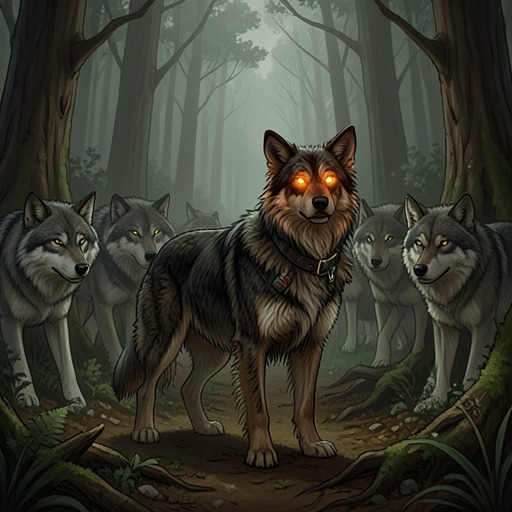
The Call of the WildGhost Dog is the name that grows around Buck after John Thornton’s death releases him from the last bond tying him to human life. The expression transforms a living animal into a regional legend: to the Yeehats, Ghost Dog is an Evil Spirit and a supernatural terror, while the narrative reveals a more concrete creature—a powerful, cunning wolf-like dog who leads the pack, raids human camps, kills dogs, and preserves an annual attachment to the desolated site of Thornton’s death.
Origin in Violence and Vengeance
The legend begins with Buck’s attack on the Yeehats after he returns to camp and discovers the destruction of the spruce-bough lodge. Overwhelmed by rage and by his love for John Thornton, Buck abandons his usual cunning and hurls himself directly into the attackers. He kills the chief by ripping open his throat, tears the throat of a second man as he passes, and continues moving among the Yeehats with such speed that their arrows strike one another. When a young hunter throws a spear at him, the weapon passes through Buck and kills another hunter instead. The Yeehats flee in panic, proclaiming that the Evil Spirit has appeared.
Buck pursues them through the woods, dragging them down as though they were deer. The attack is therefore not merely a defensive act or a single moment of grief: it becomes a campaign of destruction that scatters the Yeehats across the country. When the survivors gather a week later, they count their losses, while Buck returns to the ruined camp and discovers the full consequence of the violence. Pete is dead in his blankets, Hans lies feathered with arrows, Skeet has died faithfully beside the pool, and John Thornton’s trail ends in the water. Buck understands that Thornton is dead, and the absence leaves an aching void that food cannot fill. His killing of the Yeehats gives him pride, but it cannot restore the human relationship that had made his life in the Northland meaningful.
From Living Animal to Reported Apparition
The Yeehats do not describe Buck as an ordinary dog. Their fear converts his physical actions into supernatural language, first calling him the Evil Spirit and treating him as the Fiend incarnate. The transformation is supported by the scene’s combination of recognizable animal behavior and apparently impossible force. Buck moves too rapidly for the attackers to coordinate against him, survives a close assault, and turns their weapons into instruments of their own deaths. The legend thus emerges from a failure of human perception and control: the Yeehats can see the consequences, but they cannot master the creature producing them.
In later years, the story becomes attached to the changing appearance of timber wolves. Some are seen with brown markings on the head and muzzle and a white rift down the chest, features that recall Buck’s distinctive coloring. More importantly, hunters report a Ghost Dog running at the head of the pack. The figure is feared for practical rather than merely symbolic reasons: it steals from camps during fierce winters, robs traps, slays dogs, and defies the bravest hunters. Some hunters fail to return, while others are found with their throats cruelly slashed and with wolf prints in the snow larger than those of any ordinary wolf. The reports intensify the legend by combining recurring physical evidence with stories of disappearance and death.
Leadership of the Wolf Pack
Ghost Dog is not only a haunting rumor but the name given to Buck’s position within the wolf pack. After mourning Thornton, Buck hears the many-noted call from the forest with a force greater than ever before. The wolf pack has crossed into his valley while following migrating moose, and Buck meets it alone in the moonlit clearing. He kills the first wolf that attacks by breaking its neck, wounds or repels three more, and then withstands the whole pack by using his speed, agility, and a gravel-bank angle that protects his rear and sides.
The confrontation ends not with Buck’s defeat but with recognition. The wild brother with whom Buck once ran approaches in a friendly manner, and the two touch noses. An old, battle-scarred wolf then begins the long howl; the pack joins him, and Buck answers. Once the call has been answered, the pack crowds around Buck in a half-friendly, half-savage acceptance before running into the woods with him. The Ghost Dog’s authority therefore rests on both combat and affiliation. He proves that he can survive the pack’s challenge, but he also becomes part of its collective movement, running beside the wild brother and taking his place at the head.
The Animal Behind the Legend
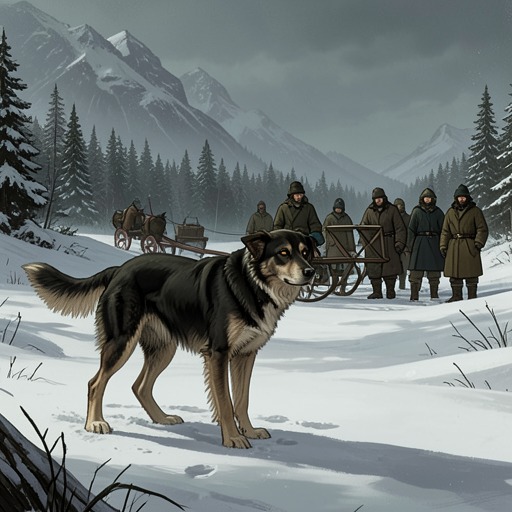
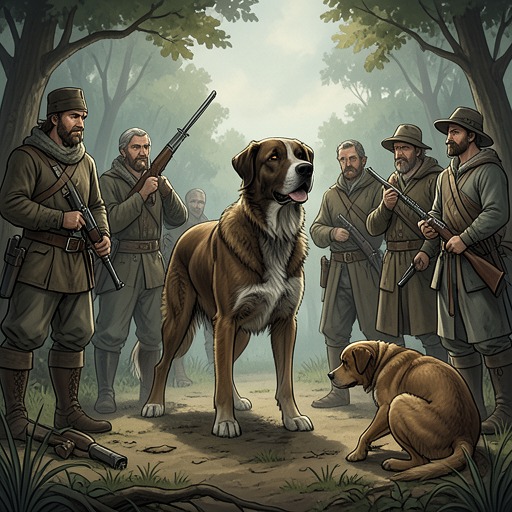
The legend is prepared by Buck’s earlier adaptation to the Northland. Hunger teaches him to eat rapidly, defend his ration, and steal secretly when open possession is impossible. His theft of bacon demonstrates that he can observe another dog’s method, reproduce it successfully, and avoid punishment while Dub is blamed. These actions mark his adjustment to the law of club and fang, under which civilized respect for property becomes a liability. Ghost Dog is consequently not a sudden supernatural alteration; he is the final public form of a long process in which Buck learns to survive through concealment, opportunism, force, and judgment.
The same development appears in his hunting. During the chase after a snowshoe hare, Buck leads a pack of sixty dogs through the moonlit landscape and experiences the bloodlust and living pursuit of the hunt. Later he kills a black bear while fishing, scatters wolverines from its carcass, and becomes a predator who survives by his own strength. His most demanding hunt is the pursuit of a wounded bull moose. The animal stands more than six feet high, carries antlers branching to fourteen points and spanning seven feet, and has an arrow protruding from its flank. Buck separates it from the herd by barking, dancing, retreating, and repeatedly provoking it, while patiently wearing down the younger bulls and the herd’s willingness to rescue their leader. After four days he pulls the moose down, rests beside the kill, and then finds his way home through unfamiliar country with a certainty of direction beyond the reliability of a human magnetic needle.
Seasonal Return and Narrative Significance
Ghost Dog remains connected to the valley where Thornton died. Each summer, a great wolf with Buck’s coloring crosses alone from the timber country to the open space among the trees. There, beside the yellow stream flowing from rotted moose-hide sacks and disappearing beneath grass and vegetable mold, he pauses and howls once, long and mournfully, before leaving. The visit preserves a physical memory of the camp without restoring the past. Buck has returned to the world of wolves, yet the landscape still draws him back to the human life he lost.
In winter, when the wolf pack follows its meat into the lower valleys, Ghost Dog may be seen running at its head beneath pale moonlight or the glimmer of the borealis. He leaps above the other wolves and bellows the pack’s song, becoming both individual and collective: the remembered dog whose body bears the marks of domestic ancestry, and the wild leader whose voice belongs to a younger world. The expression therefore names Buck’s final condition as legend. It joins fear, memory, predation, leadership, and mourning, presenting his complete passage from a stolen domestic animal to a creature whose wild existence survives in the stories and taboos of the Yeehats.